
learning
•
Apr 02, 2026
Back to resources
Selling Your Produce with a Clear Plan
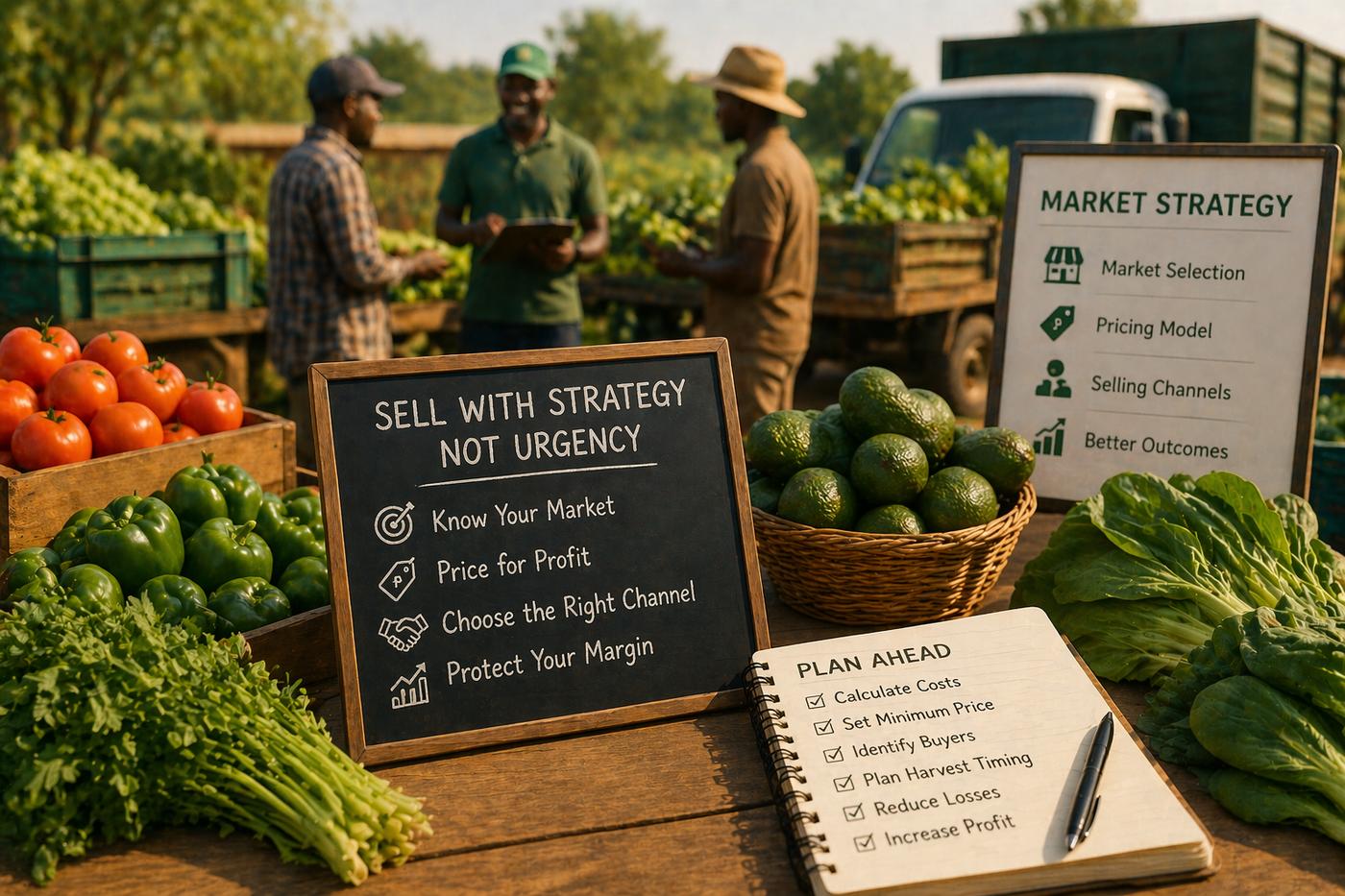
This helps you choose the right markets, price your produce correctly, and sell in a way that protects your margins and reduces post-harvest losses.
Why Selling Strategy Matters
Most farming effort goes into production, but many losses happen after harvest. Poor pricing, weak market selection, and rushed selling decisions often reduce profits that were already earned in the field.
Selling should not be reactive.
“If you wait until harvest to think about selling, you have already lost control.”
A structured selling approach ensures that your produce moves at the right time, at the right price, and through the right channel.
Understand the Markets You Are Selling Into
Not all markets behave the same. Choosing where to sell is as important as what you grow.
Two common options:
- Local markets
Faster sales, lower transport complexity, but often more price fluctuation - Export or premium markets
Higher potential pricing, but stricter quality standards and longer timelines
The decision should be based on your capacity. If consistency and quality control are strong, higher-value markets become more viable.
The best market is not always the highest price, but the most reliable outcome.
Track Demand Cycles, Not Just Prices
Prices change based on timing, not just supply.
Understanding demand cycles allows you to position your harvest better. This includes identifying:
- High-demand periods when prices peak
- Low-demand periods when supply is high
- Seasonal trends specific to your crop
This information helps you decide:
- When to harvest
- Whether to store or sell immediately
- How to stagger production if possible
Small timing adjustments can significantly improve revenue.
Set a Minimum Price Before You Sell
Before entering the market, you should already know your minimum acceptable price.
This is based on total cost, including:
- Production inputs
- Labour
- Transport
- Storage and handling
If you do not know your cost, you cannot protect your margin.
A simple approach:
- Calculate total cost per crop cycle
- Divide by expected yield
- Add a margin buffer
This gives you a baseline price below which you should not sell unless necessary.
Balance Cost-Based and Market-Based Pricing
Pricing is not only about your costs. It must also reflect market conditions.
You need to balance two perspectives:
- Cost-based pricing ensures you do not sell at a loss
- Market-based pricing ensures your product remains competitive
To stay aligned with the market:
- Observe prices from multiple buyers
- Track competitor pricing
- Understand buyer expectations for quality and quantity
The goal is not the highest price, but the best sustainable margin.
Choose the Right Selling Channel
How you sell is just as important as where you sell.
Common options include:
Direct sales
- Higher margins
- Requires consistent quality and customer trust
- More involvement in marketing and logistics
Cooperatives or aggregators
- Easier access to larger markets
- Shared logistics and bargaining power
- Lower individual control over pricing
Each option has trade-offs. The choice should depend on your scale, consistency, and available time.
“Better channels reduce effort while improving returns.”
Plan Your Sales Before Harvest
Selling decisions should be made before produce is ready.
A basic pre-harvest checklist:
- Identify your target market
- Set your minimum price
- Choose your selling channel
- Confirm potential buyers or outlets
This reduces pressure during harvest and prevents rushed decisions that lead to lower prices.
Reduce Post-Harvest Losses
Losses after harvest directly affect income, even when yields are good.
Common causes include:
- Poor storage conditions
- Delayed transport
- Lack of immediate buyers
- Quality deterioration
To reduce losses:
- Align harvest timing with confirmed demand
- Prepare storage where necessary
- Plan transport in advance
Protecting your harvest is part of your selling strategy.
Build Relationships, Not Just Transactions
Markets are not only about price. Relationships matter.
Reliable buyers can provide:
- Consistent demand
- Better price stability
- Faster transactions
Focus on:
- Delivering consistent quality
- Communicating early about supply
- Building trust over multiple cycles
Over time, this reduces uncertainty and improves negotiating power.
Review and Improve After Each Cycle
After every selling cycle, take time to evaluate performance.
Key questions to ask:
- Did you meet your target price
- Which market performed best
- Where did you lose margin
- What can be improved next time
Document these insights. Over time, they become a practical guide for future decisions.
Treat Selling as Part of the Farming System
Selling is not the final step. It is part of the full farming system.
At a high level:
- Plan your market early
- Price based on both cost and reality
- Choose channels that match your capacity
- Execute with timing and preparation
- Review and improve continuously
When this approach is applied consistently, farming shifts from uncertain selling to controlled, strategic market participation.