
guide
•
Apr 02, 2026
Back to resources
Moving Your Farm Records from Paper to Digital
This resource walks you through shifting to digital farm records, helping you monitor performance over time and make more accurate decisions based on real data from your own operations.
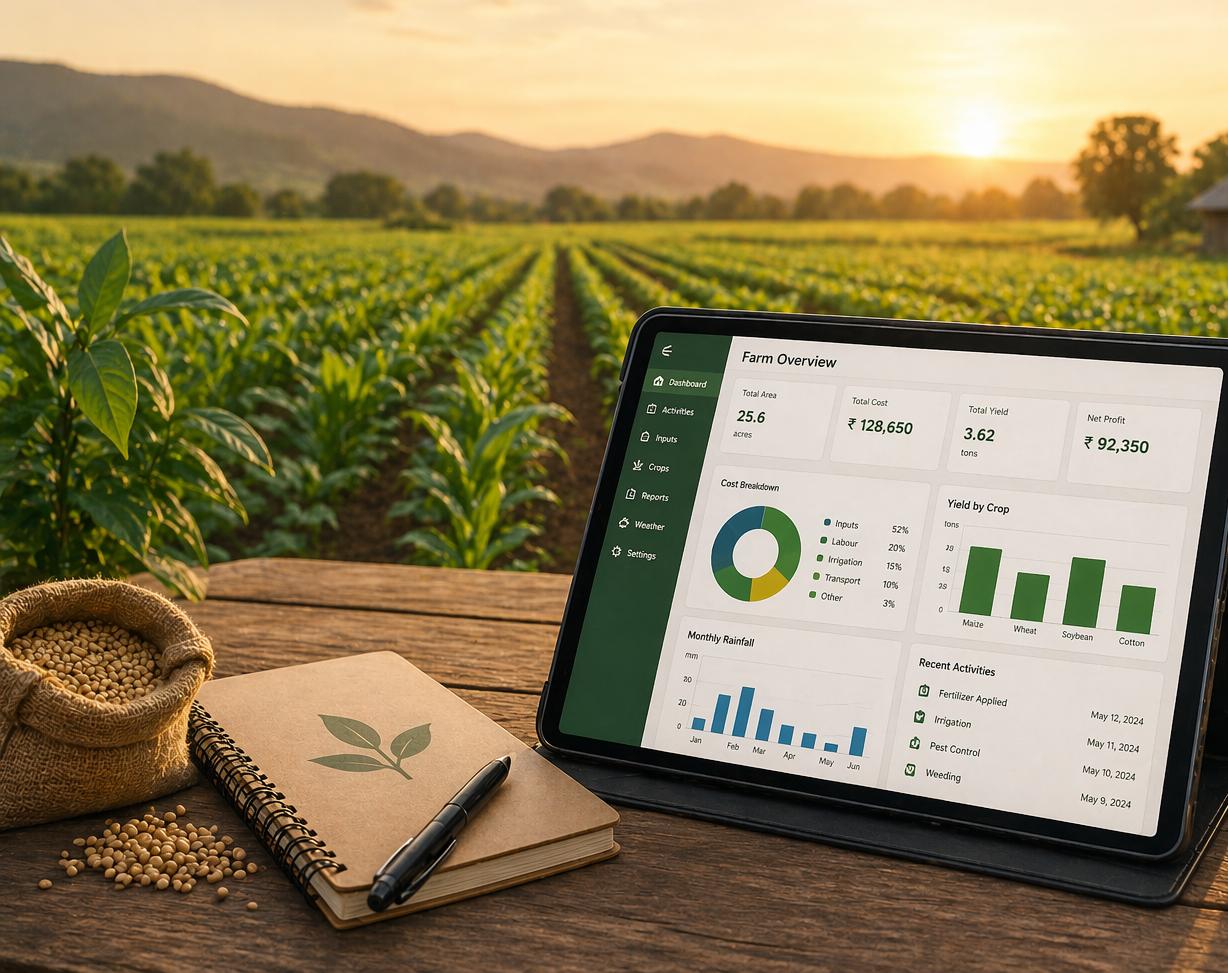
Why Digital Records Improve Outcomes
Farming generates a lot of information, but most of it is lost when it is not recorded properly.
Digital records change this. They organize your data in a way that makes patterns visible. Over time, you begin to see how costs behave, how yields respond to conditions, and where improvements can be made.
“Good decisions come from clear records, not memory.”
When records are structured, it becomes possible to compare seasons, understand cost pressure, and make better planting and selling decisions.
Start With a Clear Purpose
Digital record keeping is not about using technology for the sake of it. It is about improving decision-making.
Before adopting any system, define what you want to achieve:
- Track farm expenses accurately
- Measure crop performance
- Compare results across seasons
- Reduce losses and improve efficiency
This clarity ensures that records remain useful and not just a routine task.
Use Data to Guide Decisions
One of the main advantages of digital records is the ability to use past data to guide future actions.
With consistent records, you can:
- Estimate expected yields based on previous seasons
- Adjust planting times based on observed outcomes
- Identify which crops perform best under certain conditions
Decisions move from guesswork to informed planning.
Build a Farm History Over Time
Every farm has its own patterns. Soil behavior, climate response, and crop performance vary from one location to another.
A structured record system allows you to build a farm history that answers key questions:
- What worked well last season
- What failed and why
- What should be adjusted going forward
This history becomes more valuable with each season recorded.
Know What to Record
Recording everything is not necessary. Recording the right things consistently is what matters.
Focus on three core areas:
1. Inputs, Outputs, and Costs
- Seed quantities and cost
- Fertilizer and pesticide usage
- Labour and operational costs
- Harvest quantities and sales
2. Weather and Conditions
- Rainfall levels
- Temperature changes
- Notable weather events such as drought or heavy rain
3. Crop Performance
- Yield per crop cycle
- Quality of produce
- Market outcomes
These categories create a complete picture of how the farm is performing.
Record Activities as They Happen
Timing is critical for accurate data.
Entries should be made as close as possible to when activities occur. Delayed recording often leads to missing details or incorrect values.
To maintain consistency:
- Record inputs immediately after use
- Log labour and activities at the end of each day
- Update harvest and sales data as transactions happen
Accuracy depends on consistency, not complexity.
Use Simple Tools Effectively
Digital systems do not need to be complicated to be effective.
Tools like FarmLens are designed to simplify the process by allowing you to:
- Log farm activities in real time
- Store records in a structured format
- Access data from anywhere
The goal is not to replace your workflow but to improve how information is captured and used.
Review Reports Regularly
Data becomes valuable when it is reviewed and applied.
Set a consistent review schedule:
Monthly
- Analyze total costs
- Review crop performance
- Identify trends in spending and output
Seasonally
- Compare results across cycles
- Evaluate profitability per crop
- Adjust planning assumptions
This turns records into a decision-making tool rather than a storage system.
Make It a Team Habit
Digital record keeping should not depend on one person.
To make it sustainable:
- Assign responsibility for logging specific activities
- Train workers on what to record and when
- Keep the process simple and consistent
At the beginning, it may require active follow-up. Over time, it becomes part of normal farm operations.
“Systems work when people follow them consistently.”
Transition Gradually, Not All at Once
Moving from paper to digital does not need to happen in one step.
Start small:
- Begin with one crop or activity
- Record only essential data
- Build consistency before expanding
This reduces resistance and makes adoption easier across the team.
Treat Data as a Long-Term Asset
Each record you capture adds value beyond the current season.
Over time, your data will:
- Improve forecasting accuracy
- Support better financial planning
- Reduce uncertainty in decision-making
The longer you track, the more reliable your decisions become.
Make Digital Records Part of Your Farm System
Digital record keeping should be integrated into daily operations, not treated as a separate task.
At a high level:
- Record activities as they happen
- Store data in a structured format
- Review regularly
- Use insights to improve decisions
When this system is maintained, the farm becomes more informed, more efficient, and more resilient over time.
This is not about technology. It is about clarity, consistency, and using your own data to improve how the farm operates.