
Quick stats
| Family | Lauraceae |
|---|---|
| Typical harvest | 12.3 t/ha |
| Varieties | 3 |
| Pests & diseases | 7 |
| Seasons | 0 |
Crop profile
| Growth habit | tree |
|---|---|
| Days to harvest | 365 |
| Main uses | Fruits eaten fresh with meals, in salads, sandwiches, juice and guacamole; also used for oil and animal feed from rejects. |
| Pollination | insect |
| Origin / where it grows | Avocado (parachichi) is widely grown in cool to warm mid-altitude areas of East Africa, especially around homesteads and in commercial orchards. |
Weather, soil & spacing
| Best temperature | 16–26 °C |
|---|---|
| Rainfall | 900–1400 mm/yr |
| Altitude | 1000–2400 m |
| Best pH | 6–6.8 |
| Soil type | Deep, well-drained loam or sandy loam rich in organic matter. Avocado (parachichi) roots need plenty of air and do best where water moves through the profile. |
| Row spacing | 700 cm |
| Plant spacing | 700 cm |
| Seed rate | kg/ha (check local recommendation) |
| Nursery days | 270 |
Simple notes for farmers
About the crop: This crop has a growth habit described as "tree". You can normally start harvesting about 365 days after planting, depending on care and variety.
Main use: Farmers mostly grow this crop for fruits eaten fresh with meals, in salads, sandwiches, juice and guacamole; also used for oil and animal feed from rejects..
Pollination: This crop is mainly pollinated by insect. Keeping flowers healthy and having insects like bees in the field helps improve fruit set and yields.
Where it grows: Avocado (parachichi) is widely grown in cool to warm mid-altitude areas of East Africa, especially around homesteads and in commercial orchards. It is grouped under: Fruits & Nuts.
Best climate: This crop does well in warm areas where the temperature is usually between 16 and 26 degrees Celsius. It prefers places that receive around 900 to 1400 millimetres of rain in a year. It can grow from near sea level up to about 2400 metres above sea level.
Soil: The crop grows best in slightly acidic to near neutral soils, with a pH of about 6 to 6.8. It does well in deep, well-drained loam or sandy loam rich in organic matter. avocado (parachichi) roots need plenty of air and do best where water moves through the profile.. Good drainage is important, so avoid waterlogged spots.
Plant spacing: Plant in rows about 700 centimetres apart, and leave about 700 centimetres between plants in the row. This gives each plant enough space for roots and canopy to spread.
Seed or planting material: Use good quality seed or healthy planting material. Follow local extension advice for the exact amount per hectare.
Nursery period: If you raise seedlings in a nursery, keep them there for about 270 days before transplanting to the main field, when they are strong and healthy.
Farmer guide (mwongozo wa mkulima)
Nutrient schedule (mbolea kwa hatua)
| # | Stage | DAP | Product | Rate | Targets (kg/ha) | Notes |
|---|---|---|---|---|---|---|
| 1 | Basal at planting | 0 | Well-rotted manure + small P fertilizer (e.g., DAP 18-46-0) | 10 kg/tree manure + 100 g DAP | N: 0, P₂O₅: 0, K₂O: 0 | Mix manure with topsoil in the planting hole. Keep fertilizer away from the stem and main roots. |
| 2 | Young tree topdress | 180 | CAN 26% N | 150 g/tree | N: 0, P₂O₅: 0, K₂O: 0 | Apply in a ring under the canopy edge and lightly fork into the soil. |
| 3 | Pre-flowering feed | 365 | NPK 17-17-17 or 10-20-20 | 250 g/tree | N: 0, P₂O₅: 0, K₂O: 0 | Apply at the start of rains before main flowering; do not overdo nitrogen. |
| 4 | Fruit development high K | 420 | Sulfate of potash (SOP) or high-K NPK | 250 g/tree | N: 0, P₂O₅: 0, K₂O: 0 | Improves fruit size, oil content and shelf life of Avocado (parachichi). |
Nutrient requirements
| Nutrient | Stage | Amount | Unit |
|---|---|---|---|
| N | Establishment | 25 | kg/ha |
| P₂O₅ | Establishment | 25 | kg/ha |
| K₂O | Establishment | 25 | kg/ha |
| N | Vegetative | 50 | kg/ha |
| P₂O₅ | Vegetative | 20 | kg/ha |
| K₂O | Vegetative | 40 | kg/ha |
| N | Bearing_maintenance | 60 | kg/ha |
| P₂O₅ | Bearing_maintenance | 25 | kg/ha |
| K₂O | Bearing_maintenance | 80 | kg/ha |
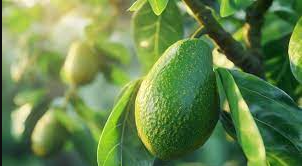
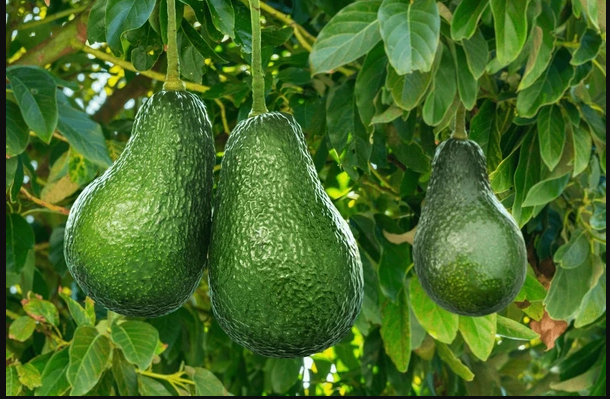
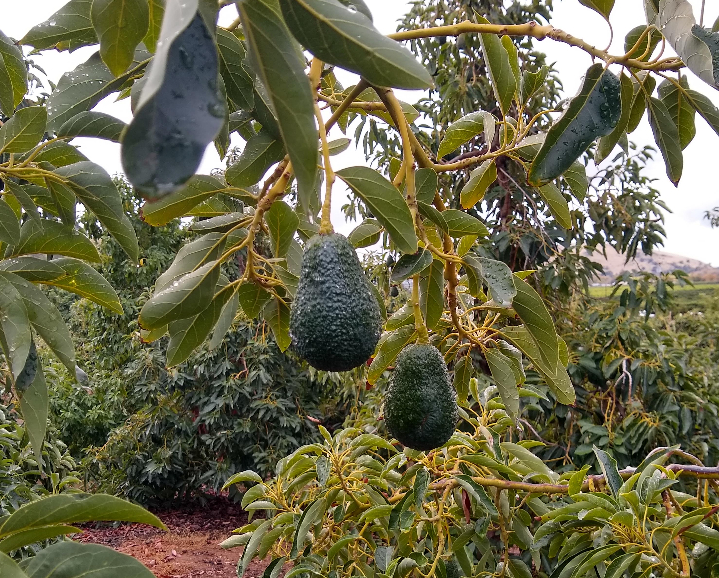
Field images (picha shambani)

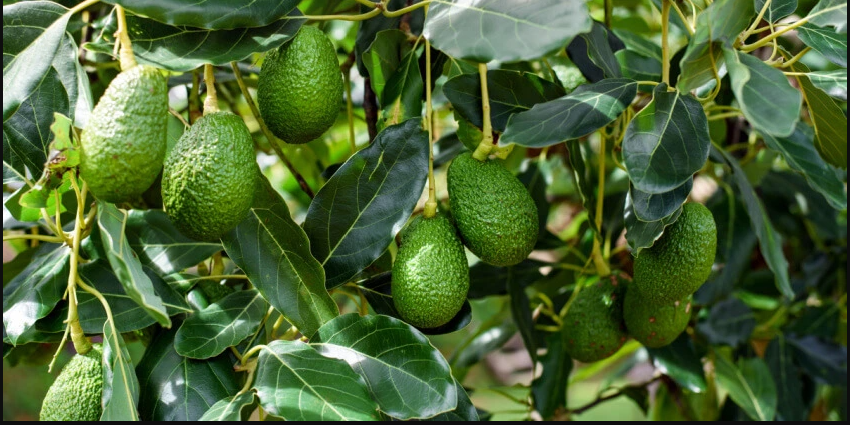
| Name | Country | Maturity | Traits |
|---|---|---|---|
| Hass | KE | 300 | Small to medium, darkening skin, high oil content and good keeping quality; common export variety. |
| Fuerte | KE | 280 | Pear-shaped green fruit with good flavour; used for fresh local markets. |
| Local Avocado (parachichi) | KE | 280 | Larger fruits, variable seed size and taste, widely grown around homesteads. |
| Stage | Product | Rate (kg/ha) | Notes |
|---|---|---|---|
| Basal (planting) | Well-rotted farmyard manure | 10000 | Apply in the planting hole and along the future root zone. |
| Young trees | CAN 26% N | 50 | Split into 2–3 small doses per year to encourage strong early growth. |
| Bearing trees base feed | NPK 17-17-17 or similar | 150 | Applied each year, often at the start of rains. |
| Fruit quality | Sulfate of potash (SOP) or high-K blend | 80 | Given around fruit set to support oil content and firmness. |
| Name | Type | Symptoms | Management |
|---|---|---|---|
| Fruit flies | pest | Collect and destroy fallen fruits, use bait traps and harvest promptly when fruits are mature. | |
| False codling moth / other fruit borers | pest | Field sanitation, removal of infested fruits and use of recommended control products where needed. | |
| Thrips | pest | Monitor during flowering and early fruit set and apply selective insecticides or biopesticides if damage is high. | |
| Mites | pest | Avoid dust, keep trees healthy with adequate water and nutrients and use specific miticides or biopesticides when necess... | |
| Root rot (Phytophthora) | disease | Plant on well-drained soils, avoid waterlogging and heavy compaction, and use tolerant rootstocks where available. | |
| Anthracnose and stem-end rots | disease | Prune for good airflow, avoid wetting fruits late in the day and use recommended fungicides as needed. | |
| Scab and leaf spots | disease | Use tolerant varieties, prune dense canopies and apply fungicides when disease pressure is high. |
| System | Typical | Min | Max | Notes |
|---|---|---|---|---|
| Scattered homestead Avocado (parachichi) trees | 5 | 3 | 8 | Little pruning or fertilizer; 50–150 kg fruit per mature tree is common. |
| Managed smallholder orchard | 12 | 7 | 18 | Improved varieties, some pruning, manure and fertilizer, basic pest and disease control. |
| Intensive / export Avocado orchard | 20 | 15 | 25 | High-density planting, drip irrigation, fertigation and well-planned canopy and pest management. |
| Country | Region | Suitability |
|---|---|---|
| KE | Central and Rift Valley highlands (Avocado belt) | |
| KE | Upper mid-altitude zones with deep, well-drained soils | |
| TZ | Northern and southern highlands | |
| UG | Highland and mid-altitude smallholder Avocado zones |