
Quick stats
| Family | Fabaceae |
|---|---|
| Typical harvest | 1.6 t/ha |
| Varieties | 3 |
| Pests & diseases | 6 |
| Seasons | 0 |
Crop profile
| Growth habit | annual |
|---|---|
| Days to harvest | 75 |
| Main uses | Dry grain for stews, boiled beans and flour; young leaves and haulms used as livestock feed. |
| Pollination | self |
| Origin / where it grows | Black-eyed pea is a type of cowpea grown widely in warm, semi-arid and subhumid areas of East Africa, often intercropped with maize or sorghum. |
Weather, soil & spacing
| Best temperature | 22–30 °C |
|---|---|
| Rainfall | 400–700 mm/yr |
| Altitude | 0–1600 m |
| Best pH | 5.5–7 |
| Soil type | Light to medium, well-drained sandy loam or loam. Black-eyed pea tolerates poorer soils better than many beans. |
| Row spacing | 60 cm |
| Plant spacing | 15 cm |
| Planting depth | 3 cm |
| Seed rate | 20 kg/ha |
| Nursery days | — |
Simple notes for farmers
About the crop: This crop is annual. You plant, grow and harvest it in one main season, then plant again. You can normally start harvesting about 75 days after planting, depending on care and variety.
Main use: Farmers mostly grow this crop for dry grain for stews, boiled beans and flour; young leaves and haulms used as livestock feed..
Pollination: This crop is mainly pollinated by self. Keeping flowers healthy and having insects like bees in the field helps improve fruit set and yields.
Where it grows: Black-eyed pea is a type of cowpea grown widely in warm, semi-arid and subhumid areas of East Africa, often intercropped with maize or sorghum. It is grouped under: Legumes & Pulses.
Best climate: This crop does well in warm areas where the temperature is usually between 22 and 30 degrees Celsius. It prefers places that receive around 400 to 700 millimetres of rain in a year. It can grow from near sea level up to about 1600 metres above sea level.
Soil: The crop grows best in slightly acidic to near neutral soils, with a pH of about 5.5 to 7. It does well in light to medium, well-drained sandy loam or loam. black-eyed pea tolerates poorer soils better than many beans.. Good drainage is important, so avoid waterlogged spots.
Plant spacing: Plant in rows about 60 centimetres apart, and leave about 15 centimetres between plants in the row. This gives each plant enough space for roots and canopy to spread.
Planting depth: Dig planting holes or furrows about 3 centimetres deep so the roots sit firmly in the soil but are not buried too deep.
Seed or planting material: Use around 20 kilograms of seed or planting material per hectare. Spread or plant evenly so the field has a good stand without being overcrowded.
Farmer guide (mwongozo wa mkulima)
Nutrient schedule (mbolea kwa hatua)
| # | Stage | DAP | Product | Rate | Targets (kg/ha) | Notes |
|---|---|---|---|---|---|---|
| 1 | Basal at planting | 0 | NPK with P (e.g., 0-23-19) or TSP + K source | 50 kg/ha | N: 0, P₂O₅: 12, K₂O: 10 | Apply in small bands or spots near, but not touching, the seed row. |
| 2 | Optional K topdress (early flowering) | 30 | Muriate of potash (MOP) or K-containing NPK | 20 kg/ha | N: 0, P₂O₅: 0, K₂O: 10 | Use mainly where crop residues are removed and soils test low in potassium. |
Nutrient requirements
| Nutrient | Stage | Amount | Unit |
|---|---|---|---|
| N | Basal | 8 | kg/ha |
| P₂O₅ | Basal | 20 | kg/ha |
| K₂O | Basal | 15 | kg/ha |
| N | Topdress_early | 0 | kg/ha |
| P₂O₅ | Topdress_early | 0 | kg/ha |
| K₂O | Topdress_early | 10 | kg/ha |
Field images (picha shambani)
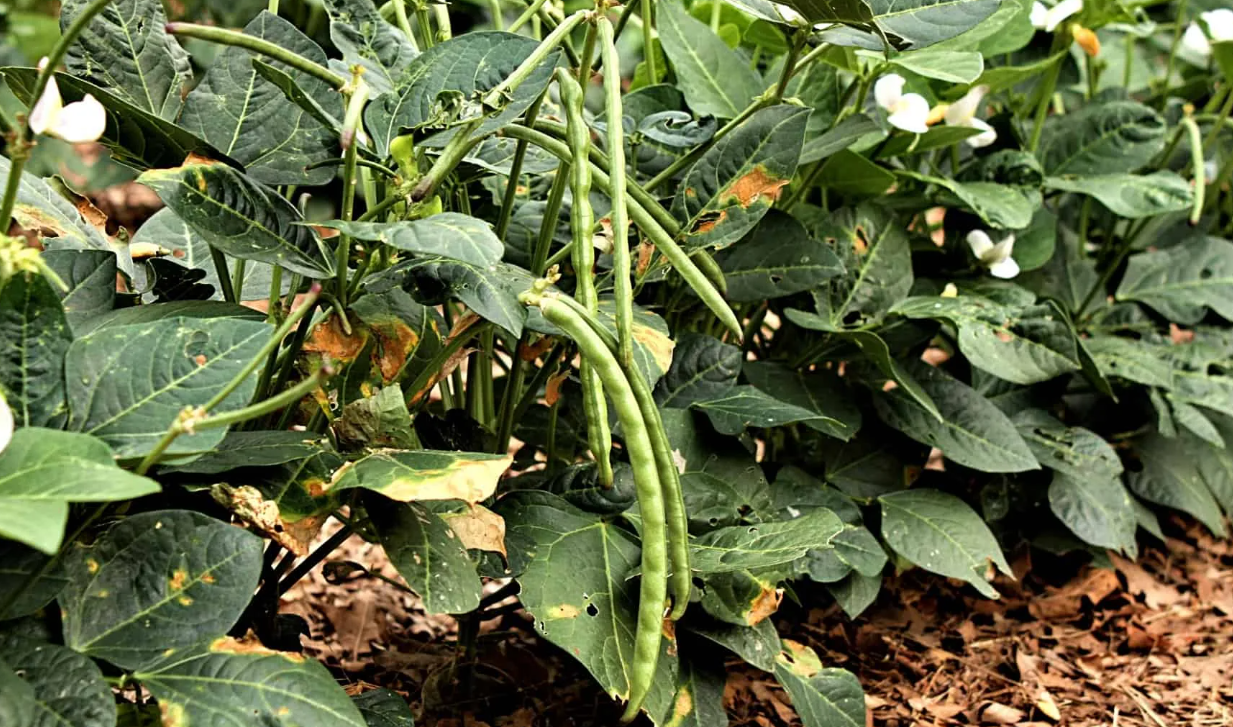
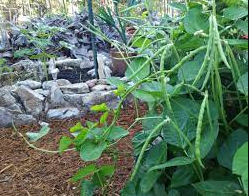
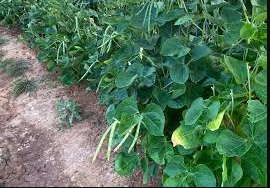
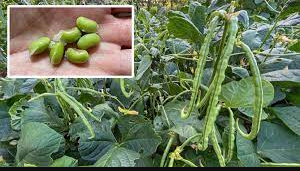
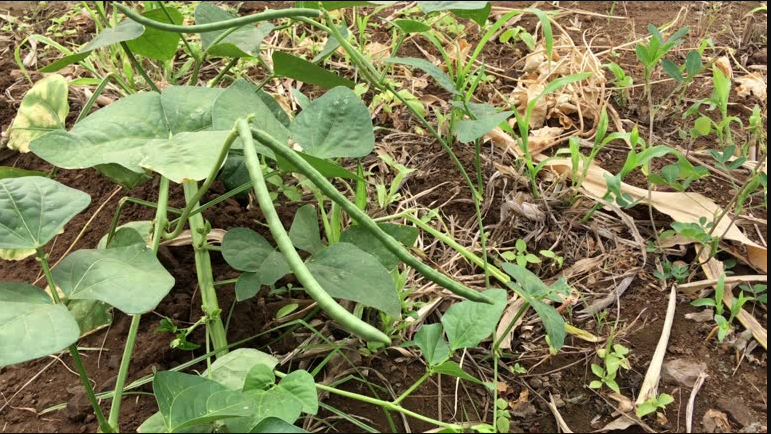
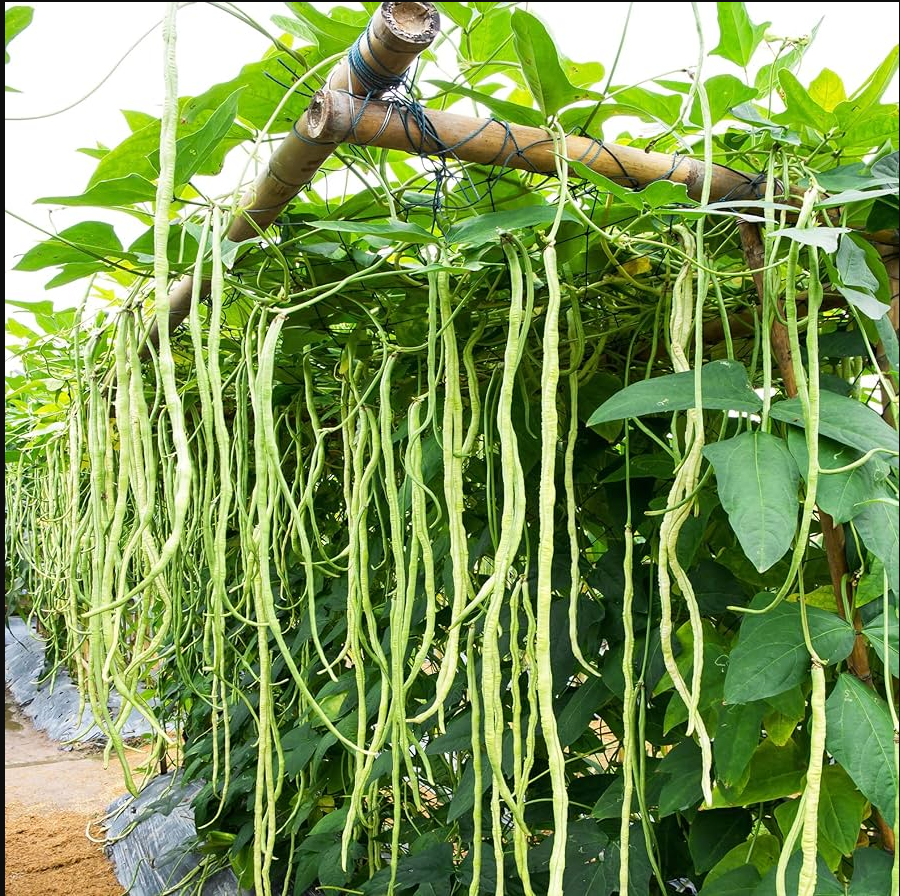
| Name | Country | Maturity | Traits |
|---|---|---|---|
| Early Black-eyed pea (bush type) | KE | 65 | Early maturing, upright plants, suited to short rains and relay cropping. |
| Medium-duration Black-eyed pea | TZ | 75 | Good grain size and cooking quality; tolerant to moderate drought. |
| Local Black-eyed pea landrace | KE | 80 | Traditional taste and adaptation; moderate yield. |
| Stage | Product | Rate (kg/ha) | Notes |
|---|---|---|---|
| Basal | NPK with P (e.g., 0-23-19) or TSP + K source | 50 | Provides phosphorus and potassium to support rooting and early growth. |
| Topdress (optional K) | Muriate of potash (MOP) or K-rich NPK | 20 | Used mainly in fields low in potassium or with frequent residue removal. |
| Name | Type | Symptoms | Management |
|---|---|---|---|
| Flower thrips | pest | Plant early, avoid very late planting and use recommended insecticides only when damage is severe. | |
| Aphids | pest | Encourage natural enemies and apply selective sprays only when aphids are very many. | |
| Pod borers | pest | Scout during flowering and early podding and treat early when first damage is seen. | |
| Leaf spots and blights | disease | Use clean seed, rotate with non-legume crops and avoid continuous cropping on the same land. | |
| Root rots (in poorly drained soils) | disease | Improve drainage, avoid waterlogging and rotate crops. | |
| Storage weevils and bruchids | pest | Dry grain well and store in airtight or treated bags; clean stores between seasons. |
| System | Typical | Min | Max | Notes |
|---|---|---|---|---|
| Smallholder rainfed (low input) | 0.8 | 0.5 | 1.2 | Local seed, little fertilizer, basic weeding and limited pest control. |
| Smallholder rainfed (improved management) | 1.5 | 1 | 2 | Improved Black-eyed pea/cowpea varieties, good spacing, starter P, timely weed and pest control. |
| High input / irrigated | 2.5 | 1.8 | 3 | Reliable moisture, balanced nutrients and well-managed pests and diseases. |
| Country | Region | Suitability |
|---|---|---|
| KE | ASAL (arid and semi-arid lands) | |
| KE | Eastern and coastal mixed farming zones | |
| KE | Very wet highland zones with heavy soils | |
| TZ | Central plateau and northern dry zones | |
| UG | Drier mixed farming and cattle corridor areas |