
Quick stats
| Family | Araceae |
|---|---|
| Typical harvest | 17.5 t/ha |
| Varieties | 2 |
| Pests & diseases | 5 |
| Seasons | 2 |
Crop profile
| Growth habit | perennial |
|---|---|
| Days to harvest | 180-300 |
| Main uses | Root/tuber; leaves vegetable |
| Pollination | insect |
| Origin / where it grows | Wet tropics |
Weather, soil & spacing
| Best temperature | 21–28 °C |
|---|---|
| Rainfall | 1500–2500 mm/yr |
| Altitude | 0–2000 m |
| Best pH | 5.8–6.5 |
| Soil type | Deep loam; moist |
| Row spacing | 100 cm |
| Plant spacing | 75 cm |
| Planting depth | 8 cm |
| Seed rate | 1000 kg/ha |
| Nursery days | — |
Simple notes for farmers
About the crop: This crop is perennial, which means once you plant it, the same plant can keep producing for many years. You can normally start harvesting about 180-300 days after planting, depending on care and variety.
Main use: Farmers mostly grow this crop for root/tuber; leaves vegetable.
Pollination: This crop is mainly pollinated by insect. Keeping flowers healthy and having insects like bees in the field helps improve fruit set and yields.
Where it grows: Wet tropics It is grouped under: Roots & Tubers.
Best climate: This crop does well in warm areas where the temperature is usually between 21 and 28 degrees Celsius. It prefers places that receive around 1500 to 2500 millimetres of rain in a year. It can grow from near sea level up to about 2000 metres above sea level.
Soil: The crop grows best in slightly acidic to near neutral soils, with a pH of about 5.8 to 6.5. It does well in deep loam; moist. Good drainage is important, so avoid waterlogged spots.
Plant spacing: Plant in rows about 100 centimetres apart, and leave about 75 centimetres between plants in the row. This gives each plant enough space for roots and canopy to spread.
Planting depth: Dig planting holes or furrows about 8 centimetres deep so the roots sit firmly in the soil but are not buried too deep.
Seed or planting material: Use around 1000 kilograms of seed or planting material per hectare. Spread or plant evenly so the field has a good stand without being overcrowded.
Farmer guide (mwongozo wa mkulima)
Nutrient schedule (mbolea kwa hatua)
| # | Stage | DAP | Product | Rate | Targets (kg/ha) | Notes |
|---|---|---|---|---|---|---|
| 1 | Basal | 0 | NPK 12-24-12 | 150 kg/ha | N: —, P₂O₅: —, K₂O: — | Band/broadcast and lightly incorporate |
| 2 | Topdress | 60 | CAN 26% N | 120 kg/ha | N: —, P₂O₅: —, K₂O: — | Apply on moist soil |
| 3 | Micronutrients | 70 | Trace mix (Zn, B) | 0 — | N: —, P₂O₅: —, K₂O: — | Foliar per label |
Nutrient requirements
| Nutrient | Stage | Amount | Unit |
|---|---|---|---|
| N | Basal | 40 | kg/ha |
| P₂O₅ | Basal | 30 | kg/ha |
| K₂O | Basal | 60 | kg/ha |
| N | Topdress | 40 | kg/ha |
Field images (picha shambani)
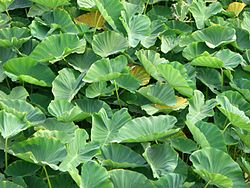
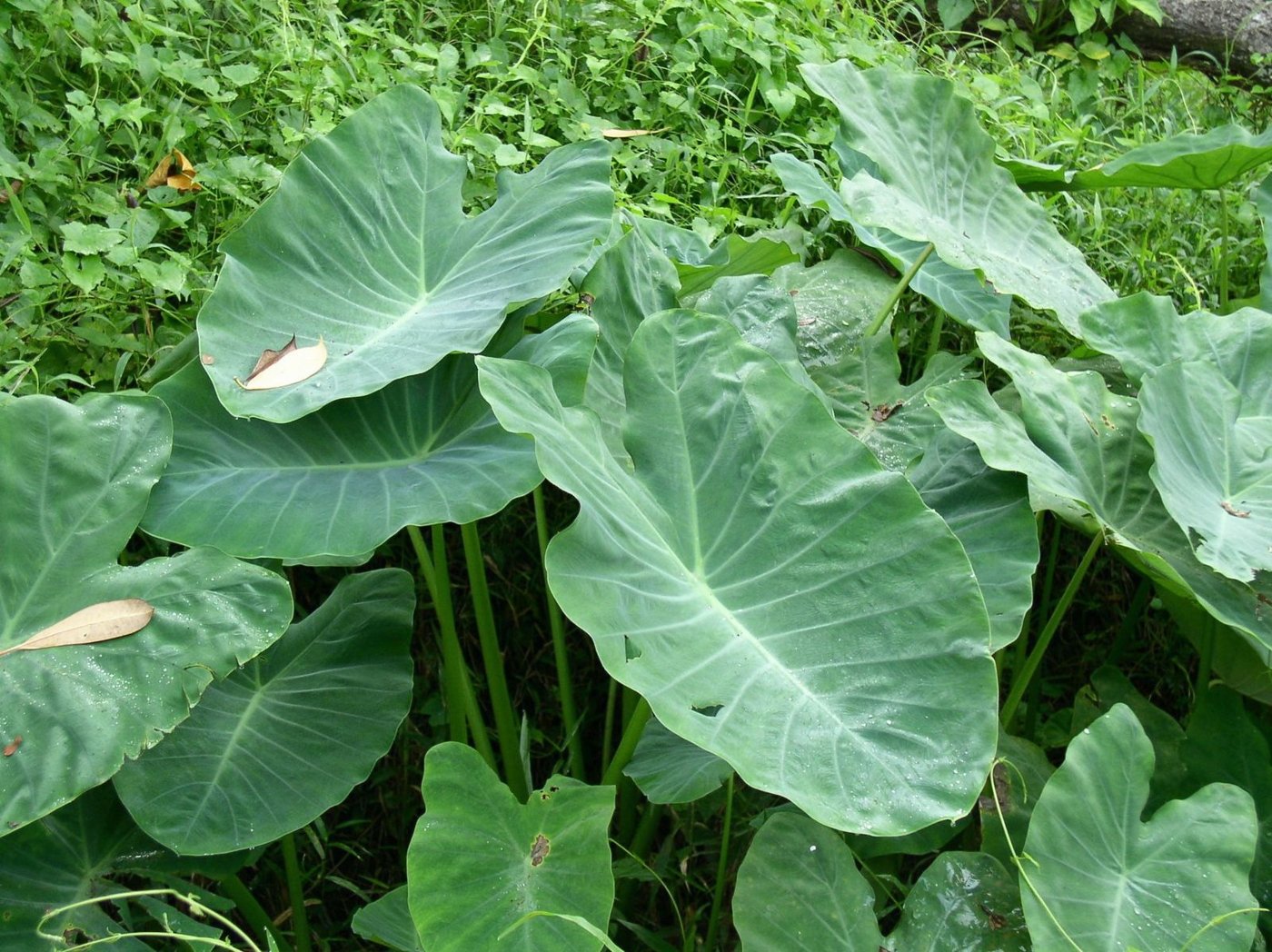
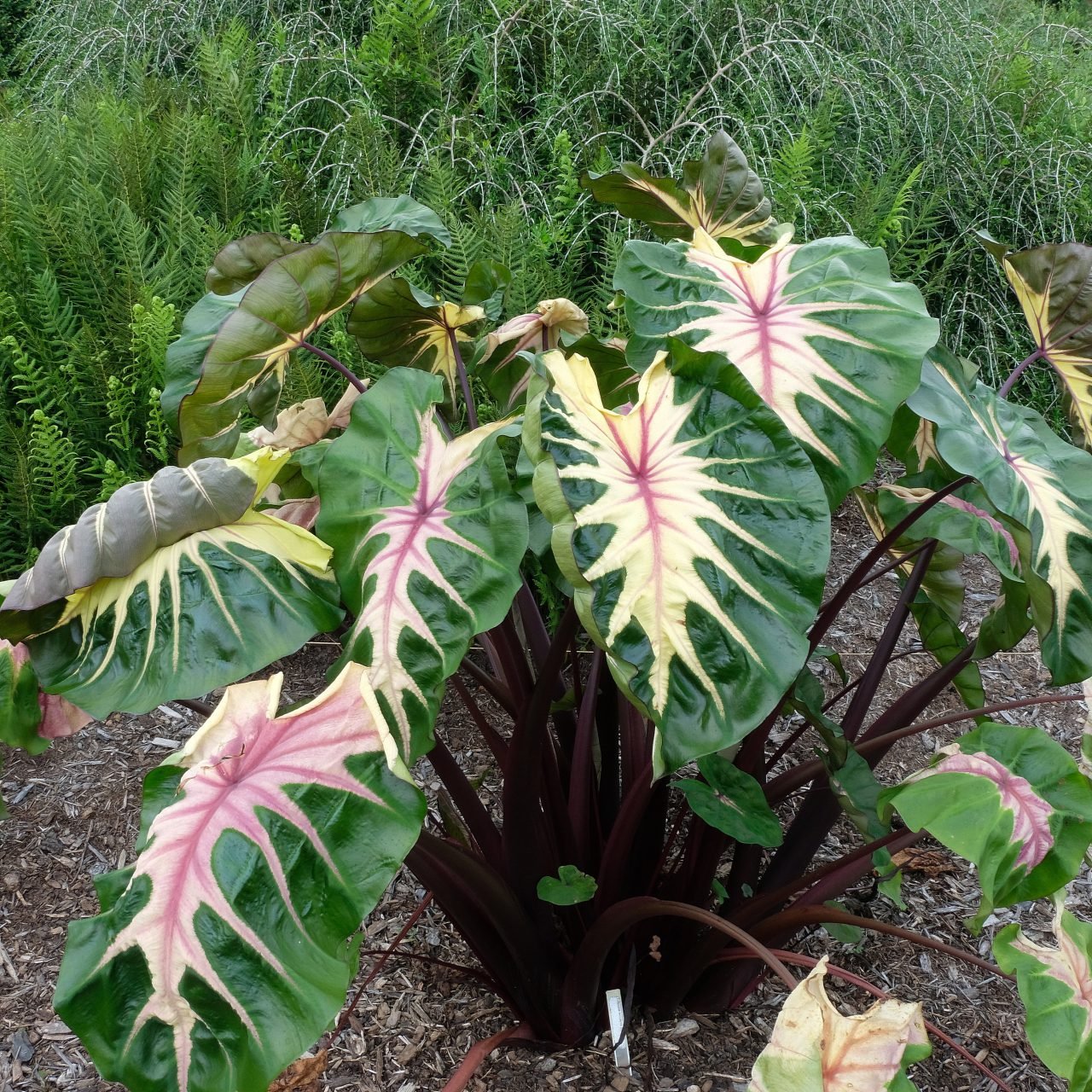
| Name | Country | Maturity | Traits |
|---|---|---|---|
| Local Cocoyam | KE | 240 | Large corms; good leaf production |
| Dasheen type | UG | 220 | Leaves and corms edible; wetland tolerant |
| Stage | Product | Rate (kg/ha) | Notes |
|---|---|---|---|
| Basal | NPK 12-24-12 | 150 | |
| Topdress | CAN 26% N | 120 | ~60 DAP on moist soil |
| Name | Type | Symptoms | Management |
|---|---|---|---|
| Taro leaf blight | disease | Leaf lesions | Sanitation; protectants |
| Taro leaf blight (Phytophthora colocasiae) | disease | Rapid foliar blight | Sanitation; spacing; resistant lines; protectants |
| Corm/cormel rots (Pythium/Fusarium) | disease | Soft rot; plant collapse | Healthy seed; drainage; rotation; avoid injury |
| Aphids | pest | Leaf curling; sooty mold | Conserve natural enemies; soft insecticides if needed |
| Cutworms | pest | Cut seedlings at base | Baits; sanitation; timely replanting |
| System | Typical | Min | Max | Notes |
|---|---|---|---|---|
| rainfed | 15 | 8 | 25 | Fresh corms |
| irrigated/wetland | 20 | 12 | 35 | Well-managed fields |
| Country | Region | Planting | Harvest |
|---|---|---|---|
| KE | Humid zones (long rains) | Mar–Apr | Sep–Dec |
| KE | Humid zones (short rains) | Oct–Nov | May–Aug |
| Country | Region | Suitability |
|---|---|---|
| KE | Arid/semi-arid uplands | Low |
| KE | Humid lowlands & mid-altitudes | High |
| KE | Humid zones | High |
| TZ | Coastal & wet valley bottoms | High |
| UG | Lake Victoria basin | High |