
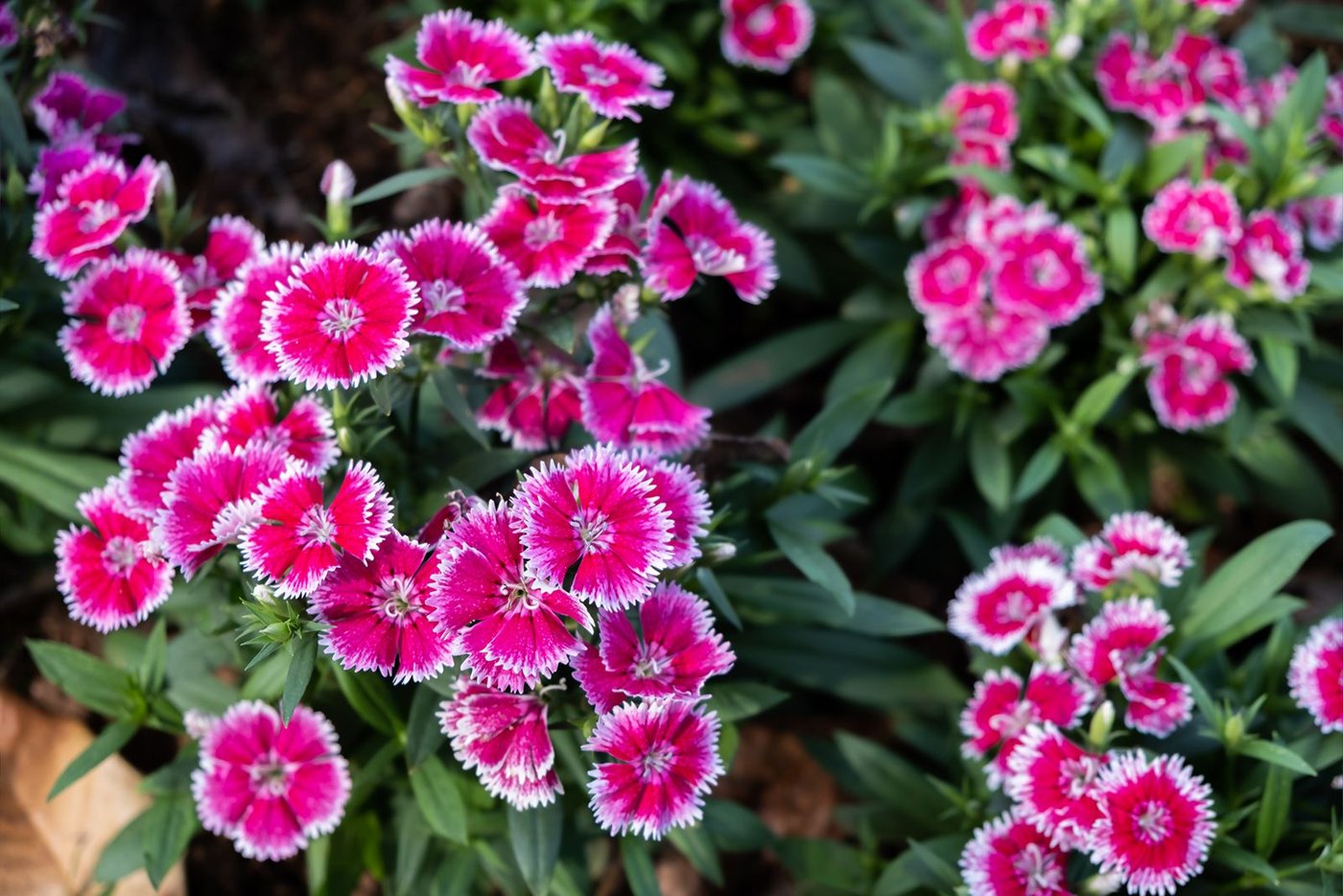
Crop details
Carnations (cut flower)
Categories
Quick stats
| Family | Caryophyllaceae |
|---|---|
| Typical harvest | 10.0 t/ha |
| Varieties | 3 |
| Pests & diseases | 9 |
| Seasons | 3 |
Crop profile
| Growth habit | perennial |
|---|---|
| Days to harvest | 365 |
| Main uses | Cut flowers for bouquets and arrangements (standard and spray types) and for florist trade. |
| Pollination | insect |
| Origin / where it grows | Cool-season floriculture crop grown in highland and temperate regions, often in greenhouses or net houses. |
Weather, soil & spacing
| Best temperature | 10–20 °C |
|---|---|
| Rainfall | 700–1100 mm/yr |
| Altitude | 1200–2600 m |
| Best pH | 6.2–6.8 |
| Soil type | Light to medium-textured, fertile, well-drained loam or sandy loam rich in organic matter, with low salinity. |
| Row spacing | 40 cm |
| Plant spacing | 20 cm |
| Planting depth | 2 cm |
| Seed rate | kg/ha (check local recommendation) |
| Nursery days | 45 |
Simple notes for farmers
About the crop: This crop is perennial, which means once you plant it, the same plant can keep producing for many years. You can normally start harvesting about 365 days after planting, depending on care and variety.
Main use: Farmers mostly grow this crop for cut flowers for bouquets and arrangements (standard and spray types) and for florist trade..
Pollination: This crop is mainly pollinated by insect. Keeping flowers healthy and having insects like bees in the field helps improve fruit set and yields.
Where it grows: Cool-season floriculture crop grown in highland and temperate regions, often in greenhouses or net houses. It is grouped under: Oil & Industrial.
Best climate: This crop does well in warm areas where the temperature is usually between 10 and 20 degrees Celsius. It prefers places that receive around 700 to 1100 millimetres of rain in a year. It can grow from near sea level up to about 2600 metres above sea level.
Soil: The crop grows best in slightly acidic to near neutral soils, with a pH of about 6.2 to 6.8. It does well in light to medium-textured, fertile, well-drained loam or sandy loam rich in organic matter, with low salinity.. Good drainage is important, so avoid waterlogged spots.
Plant spacing: Plant in rows about 40 centimetres apart, and leave about 20 centimetres between plants in the row. This gives each plant enough space for roots and canopy to spread.
Planting depth: Dig planting holes or furrows about 2 centimetres deep so the roots sit firmly in the soil but are not buried too deep.
Seed or planting material: Use good quality seed or healthy planting material. Follow local extension advice for the exact amount per hectare.
Nursery period: If you raise seedlings in a nursery, keep them there for about 45 days before transplanting to the main field, when they are strong and healthy.
Farmer guide (mwongozo wa mkulima)
Nutrient schedule (mbolea kwa hatua)
| # | Stage | DAP | Product | Rate | Targets (kg/ha) | Notes |
|---|---|---|---|---|---|---|
| 1 | Basal at planting | 0 | NPK 17-17-17 + compost | 180 kg/ha (plus 6–8 t/ha compost) | N: 30, P₂O₅: 30, K₂O: 30 | Broadcast and incorporate into raised beds before transplanting rooted cuttings. |
| 2 | Early growth topdress | 35 | CAN 26% N | 100 kg/ha | N: 26, P₂O₅: 0, K₂O: 0 | Apply along rows on moist soil; can also be delivered via fertigation in split doses. |
| 3 | Flowering K boost | 75 | Sulfate of potash (SOP) | 80 kg/ha | N: 0, P₂O₅: 0, K₂O: 40 | Apply as plants approach main flowering flushes, preferably via fertigation or banding; avoid chloride-rich K sources. |
Nutrient requirements
| Nutrient | Stage | Amount | Unit |
|---|---|---|---|
| N | Basal | 50 | kg/ha |
| P₂O₅ | Basal | 40 | kg/ha |
| K₂O | Basal | 60 | kg/ha |
| N | Early_growth | 40 | kg/ha |
| P₂O₅ | Early_growth | 10 | kg/ha |
| K₂O | Early_growth | 40 | kg/ha |
| N | Production_flush | 30 | kg/ha |
| P₂O₅ | Production_flush | 0 | kg/ha |
| K₂O | Production_flush | 60 | kg/ha |
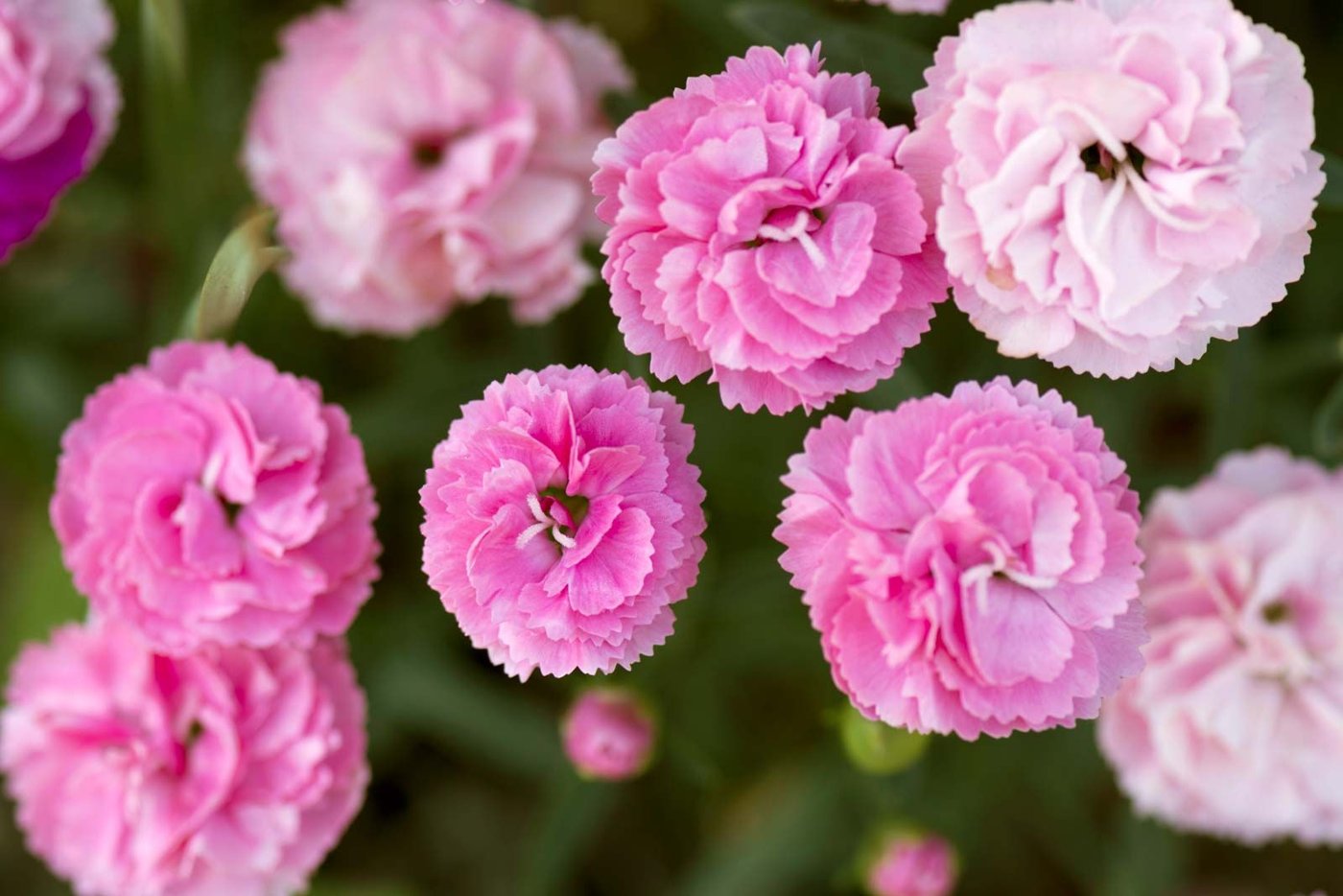
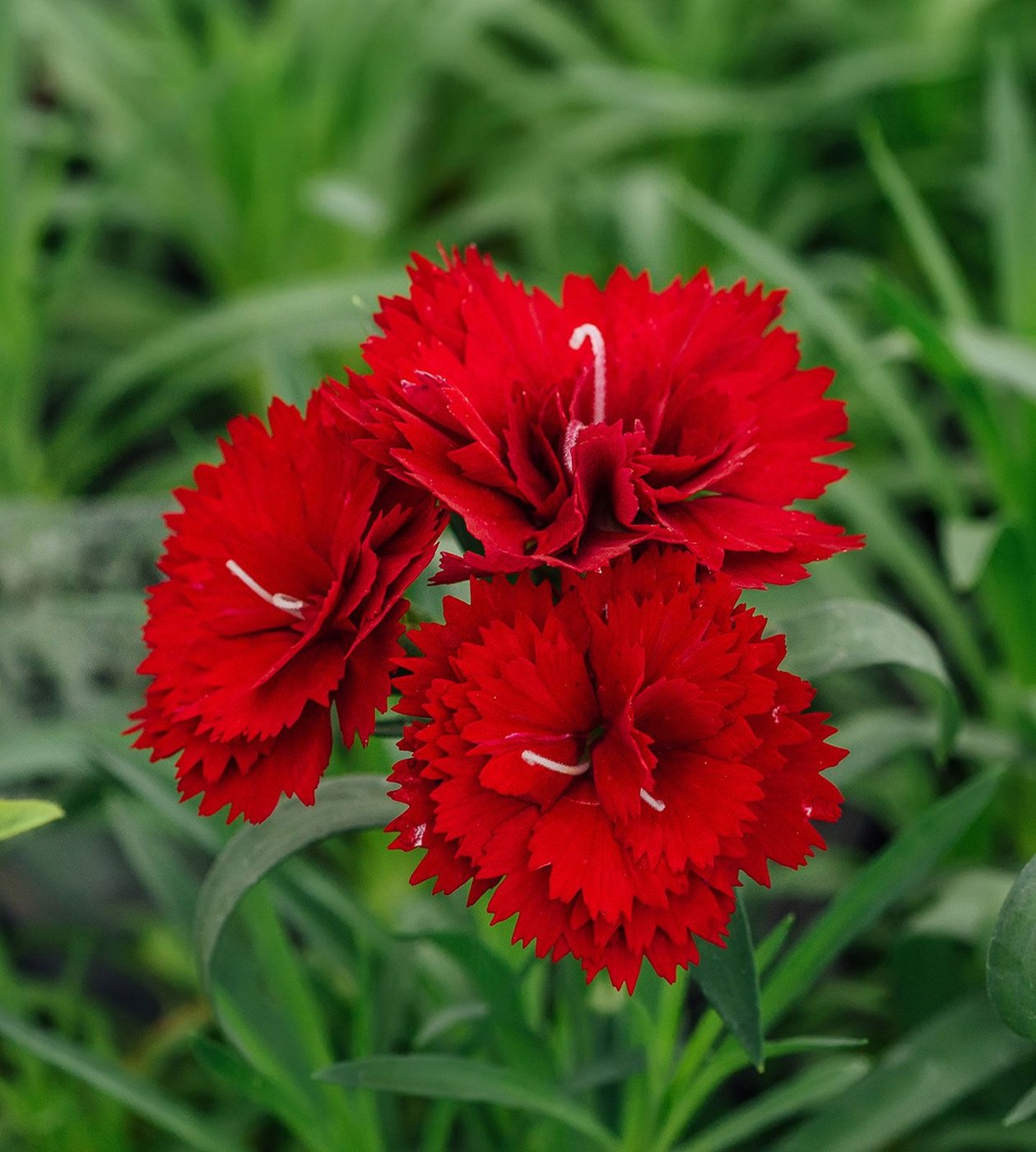
Field images (picha shambani)
| Name | Country | Maturity | Traits |
|---|---|---|---|
| Standard carnation selection (red/pink) | KE | 365 | Long stems, single large flower per stem, suited to export markets. |
| Spray carnation mix | TZ | 365 | Multiple smaller flowers per stem, ideal for bouquets and local florists. |
| Fragrant carnation type | UG | 365 | Good fragrance and colour range for niche/local floriculture. |
| Stage | Product | Rate (kg/ha) | Notes |
|---|---|---|---|
| Basal | NPK 17-17-17 + compost | 180 | Apply and incorporate into the bed before planting rooted cuttings. |
| Vegetative/early flowering | CAN 26% N | 100 | Apply in 1–2 splits after establishment or via fertigation to support vegetative growth. |
| Flowering and stem quality | Sulfate of potash (SOP) | 80 | Apply during heavy flowering periods to enhance stem strength and flower quality. |
| Name | Type | Symptoms | Management |
|---|---|---|---|
| Aphids | pest | Colonies on young shoots and buds, sticky honeydew, distorted growth and reduced bud quality. | Use biological control agents where possible, maintain weed control, and apply selective treatments based on scouting. |
| Thrips | pest | Scarring and streaks on petals and buds, distorted blooms, bronzed foliage in heavy infestations. | Monitor with sticky traps, maintain hygiene and use IPM-based controls targeting buds and flowers. |
| Spider mites | pest | Speckled leaves, fine webbing and bronzing; leaves may dry and fall in severe cases. | Avoid water stress, maintain correct humidity, and introduce predatory mites where feasible. |
| Leaf miners | pest | Winding mines in leaves, reduced photosynthetic area and cosmetic damage. | Remove and destroy mined leaves, use traps and appropriate IPM tools when thresholds are reached. |
| Cutworms/caterpillars | pest | Chewed leaves, buds and stems near the base; cut plants or damaged buds. | Good field sanitation, removal of weeds and debris, and targeted control early in infestation. |
| Fusarium wilt | disease | Yellowing, wilting, one-sided dieback and brown discolouration of vascular tissue. | Use clean planting material, well-drained beds, avoid replanting in infected soils and rotate if wilt is severe. |
| Rust | disease | Small orange-brown pustules on undersides of leaves, yellowing and premature leaf drop. | Maintain airflow, avoid overcrowding and prolonged leaf wetness, and remove infected foliage. |
| Botrytis (grey mould) | disease | Brown lesions on petals and buds, grey mould in cool, humid conditions, postharvest flower decay. | Avoid overhead watering late in the day, harvest dry flowers, improve ventilation and maintain hygiene in houses and pac... |
| Bacterial stem/collar rots | disease | Soft rots at soil line and stem base, lodging plants, foul smell. | Use well-drained media, avoid over-irrigation and injury at stem base, and remove affected plants promptly. |
| System | Typical | Min | Max | Notes |
|---|---|---|---|---|
| Open-field / low-input carnations | 5 | 3 | 7 | Represents modest stem production; actual monitoring often in stems/ha (~150–250k stems). |
| Greenhouse/net house managed | 10 | 6 | 14 | Well-managed cut flower system, often 200–350k marketable stems/ha/year. |
| Intensive export floriculture | 15 | 10 | 20 | High plant density, good fertigation and climate management, with rigorous grading for export. |
| Country | Region | Planting | Harvest |
|---|---|---|---|
| KE | High-altitude floriculture zones | New carnation beds can be established most of the year where irrigation is available; cooler months favoured for establishment. | Cutting starts about 4–5 months after planting and continues year-round under protected cultivation. |
| TZ | Northern and southern highlands suited to floriculture | Establish with adequate irrigation in cooler seasons or at onset of reliable rains in open or netted systems. | Continuous harvest once beds are in production, with peaks in cool, bright months. |
| UG | Highland and mid-altitude regions with cool nights | Plant when temperatures are moderate and irrigation is assured, or at onset of rainy season in open systems. | Regular harvesting of marketable stems throughout the year once plants reach bearing stage. |
| Country | Region | Suitability |
|---|---|---|
| KE | Highland floriculture belts with cool nights and good irrigation | High |
| TZ | Northern/southern highlands and selected irrigated valleys suited to cool floriculture | High |
| UG | Highland and cooler mid-altitude zones with reliable water for floriculture | High |