
Quick stats
| Family | Malvaceae |
|---|---|
| Typical harvest | 2.0 t/ha |
| Varieties | 3 |
| Pests & diseases | 7 |
| Seasons | 3 |
Crop profile
| Growth habit | annual |
|---|---|
| Days to harvest | 160 |
| Main uses | Lint for textile fibre, cottonseed for edible oil and cake for livestock feed. |
| Pollination | self |
| Origin / where it grows | Grown in warm to hot semi-arid and sub-humid regions worldwide, often under rainfed or irrigated conditions. |
Weather, soil & spacing
| Best temperature | 20–32 °C |
|---|---|
| Rainfall | 500–750 mm/yr |
| Altitude | 0–1600 m |
| Best pH | 6–7.5 |
| Soil type | Deep, well-drained loams or clay loams with good water-holding capacity and moderate to high fertility. |
| Row spacing | 90 cm |
| Plant spacing | 30 cm |
| Planting depth | 4 cm |
| Seed rate | 20 kg/ha |
| Nursery days | — |
Simple notes for farmers
About the crop: This crop is annual. You plant, grow and harvest it in one main season, then plant again. You can normally start harvesting about 160 days after planting, depending on care and variety.
Main use: Farmers mostly grow this crop for lint for textile fibre, cottonseed for edible oil and cake for livestock feed..
Pollination: This crop is mainly pollinated by self. Keeping flowers healthy and having insects like bees in the field helps improve fruit set and yields.
Where it grows: Grown in warm to hot semi-arid and sub-humid regions worldwide, often under rainfed or irrigated conditions. It is grouped under: Oil & Industrial.
Best climate: This crop does well in warm areas where the temperature is usually between 20 and 32 degrees Celsius. It prefers places that receive around 500 to 750 millimetres of rain in a year. It can grow from near sea level up to about 1600 metres above sea level.
Soil: The crop grows best in slightly acidic to near neutral soils, with a pH of about 6 to 7.5. It does well in deep, well-drained loams or clay loams with good water-holding capacity and moderate to high fertility.. Good drainage is important, so avoid waterlogged spots.
Plant spacing: Plant in rows about 90 centimetres apart, and leave about 30 centimetres between plants in the row. This gives each plant enough space for roots and canopy to spread.
Planting depth: Dig planting holes or furrows about 4 centimetres deep so the roots sit firmly in the soil but are not buried too deep.
Seed or planting material: Use around 20 kilograms of seed or planting material per hectare. Spread or plant evenly so the field has a good stand without being overcrowded.
Farmer guide (mwongozo wa mkulima)
Nutrient schedule (mbolea kwa hatua)
| # | Stage | DAP | Product | Rate | Targets (kg/ha) | Notes |
|---|---|---|---|---|---|---|
| 1 | Basal at planting | 0 | NPK 17-17-17 | 120 kg/ha | N: 20, P₂O₅: 20, K₂O: 20 | Band or place 5–7 cm to the side and below seed to avoid seed burn. |
| 2 | Early topdress (squaring) | 30 | CAN 26% N | 100 kg/ha | N: 26, P₂O₅: 0, K₂O: 0 | Apply when plants are 25–35 cm tall and first squares appear; side-dress along rows on moist soil. |
| 3 | Mid-season K support | 50 | MOP (KCl) | 70 kg/ha | N: 0, P₂O₅: 0, K₂O: 42 | Apply before peak flowering in fields with low K or high yield targets to support boll set and fibre quality. |
Nutrient requirements
| Nutrient | Stage | Amount | Unit |
|---|---|---|---|
| N | Basal | 40 | kg/ha |
| P₂O₅ | Basal | 30 | kg/ha |
| K₂O | Basal | 30 | kg/ha |
| N | Topdress_early | 40 | kg/ha |
| P₂O₅ | Topdress_early | 0 | kg/ha |
| K₂O | Topdress_early | 30 | kg/ha |
| N | Mid_season | 20 | kg/ha |
| P₂O₅ | Mid_season | 0 | kg/ha |
| K₂O | Mid_season | 20 | kg/ha |
Field images (picha shambani)
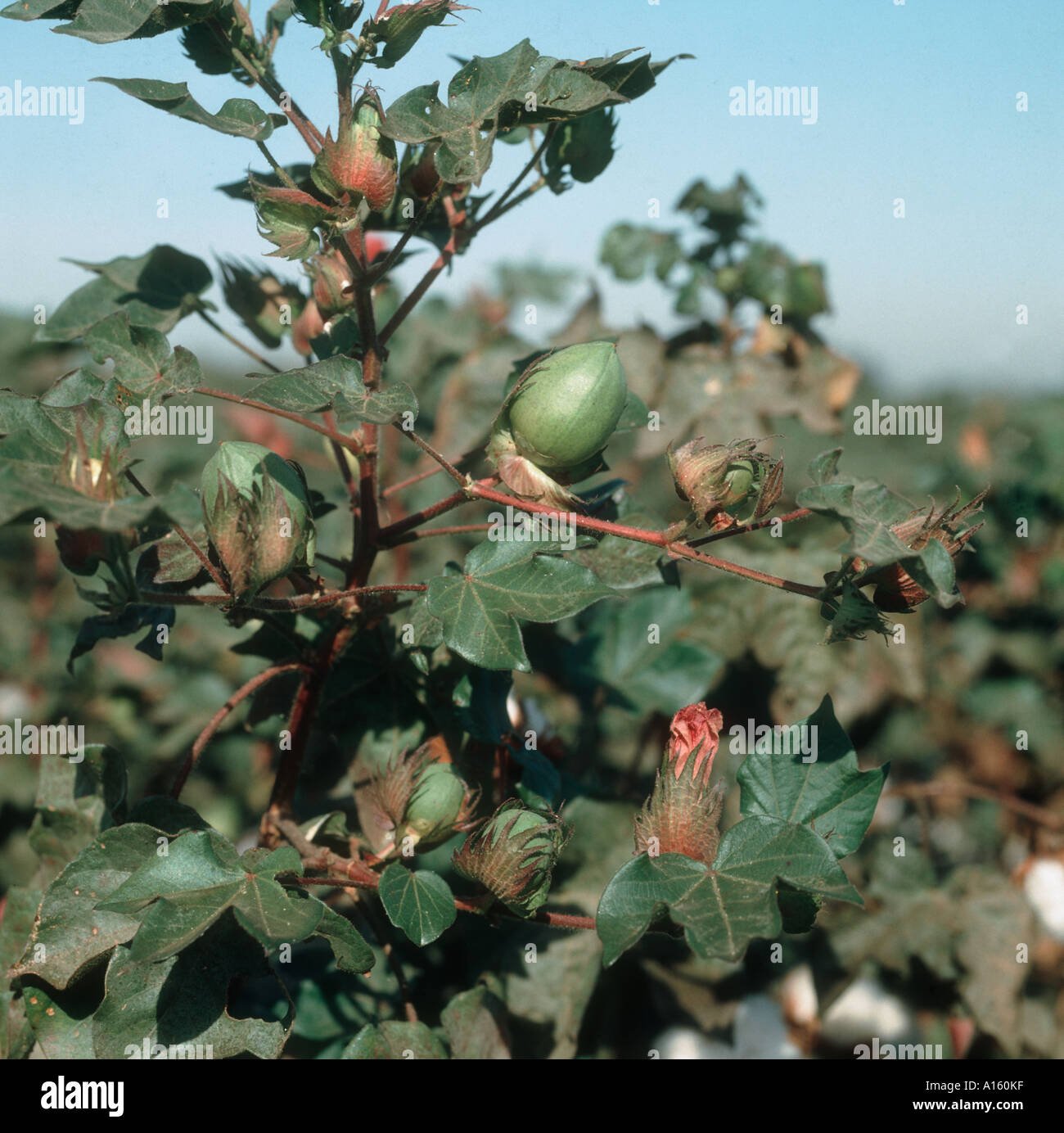
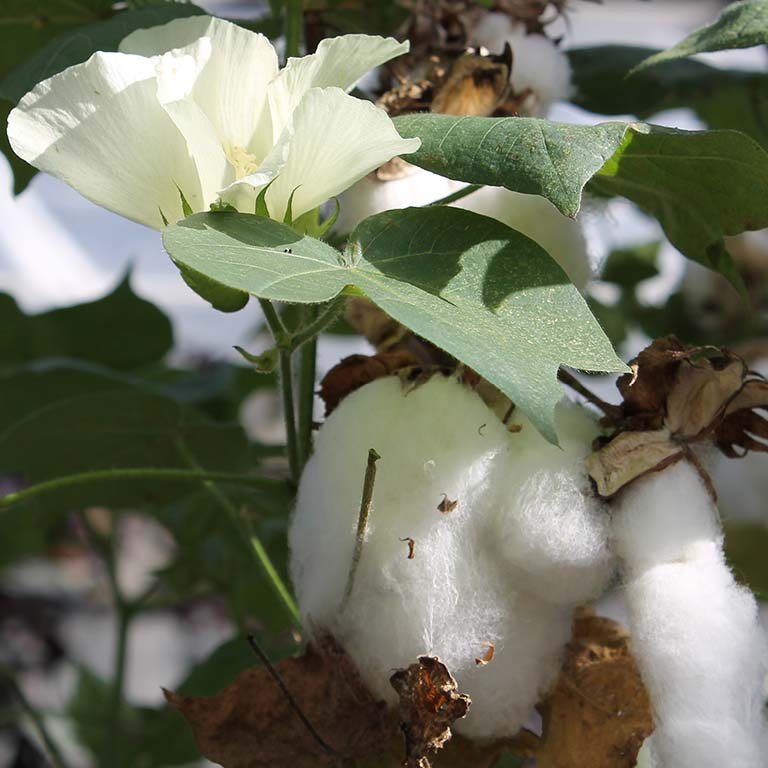
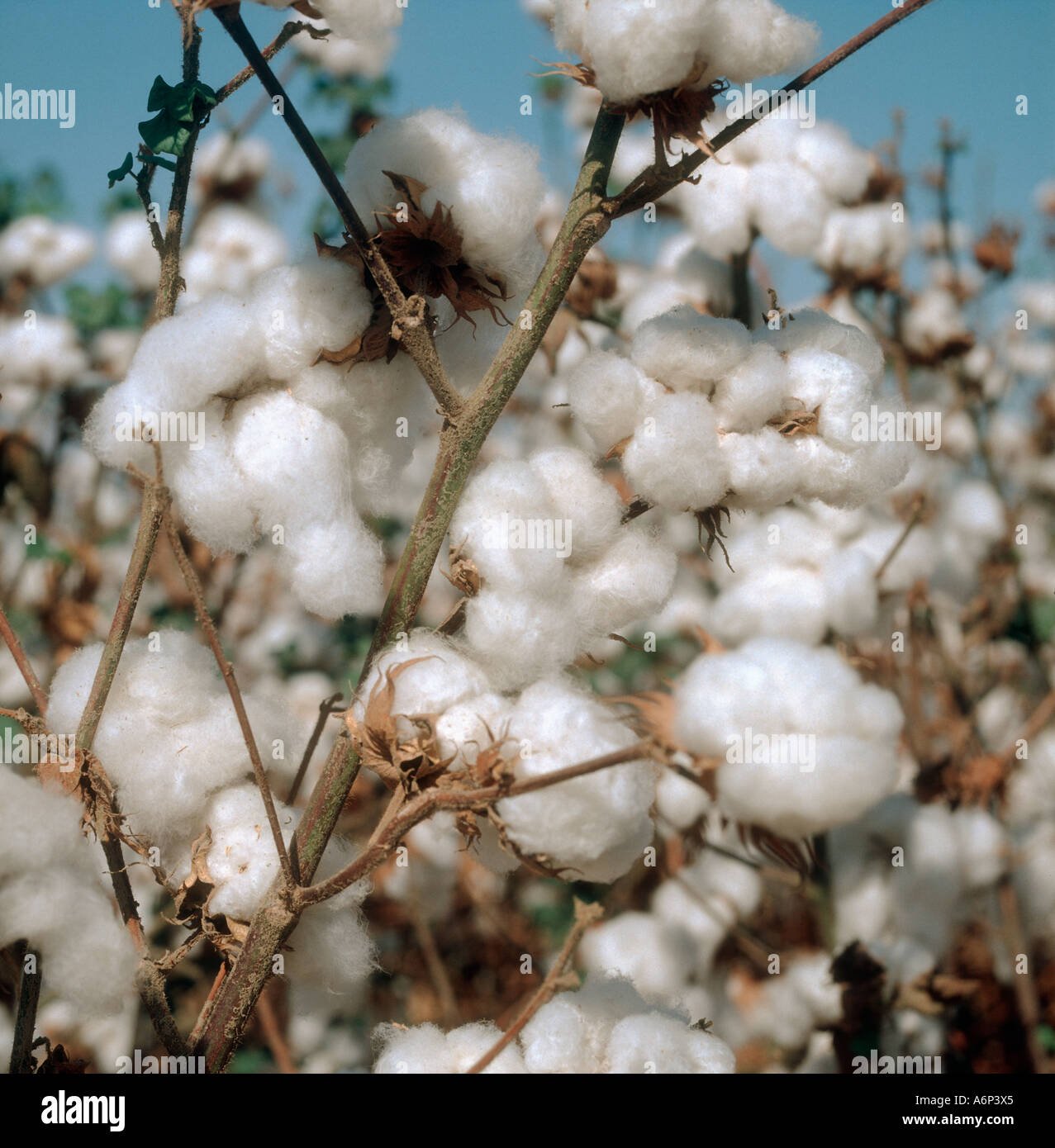
| Name | Country | Maturity | Traits |
|---|---|---|---|
| Medium-maturing cotton variety | KE | 160 | Good fibre length and strength, suited to irrigated and high-potential rainfed areas. |
| Drought-tolerant cotton selection | TZ | 150 | Adapted to semi-arid zones with stable yields under variable rainfall. |
| Local cotton landrace | UG | 165 | Farmer-selected type, tolerant to local stresses and used for household and smallholder production. |
| Stage | Product | Rate (kg/ha) | Notes |
|---|---|---|---|
| Basal | NPK 17-17-17 | 120 | Apply at planting in bands 5–7 cm away from the seed row. |
| Early vegetative / squaring | CAN 26% N | 100 | Apply 3–5 weeks after emergence when plants begin forming squares. |
| Mid-season (optional) | MOP (KCl) | 70 | Apply before peak flowering in fields targeting higher yields or with low soil K. |
| Name | Type | Symptoms | Management |
|---|---|---|---|
| Bollworms (heliothis/american bollworm, others) | pest | Feeding on squares, flowers and bolls; damaged or shed squares and stained or destroyed bolls. | Regular scouting, avoid continuous cotton, encourage natural enemies and apply selective insecticides based on threshold... |
| Aphids | pest | Clusters on young shoots and underside of leaves, leaf curling, honeydew and sooty mould. | Conserve natural enemies, avoid unnecessary broad-spectrum insecticides, treat only when economic thresholds are exceede... |
| Jassids (leafhoppers) | pest | Leaf margins turn yellow and curl downwards (“hopper burn”), stunted plants in heavy infestations. | Use tolerant varieties, monitor early, manage weeds that host jassids and only spray when above threshold. |
| Whiteflies | pest | White insects on undersides, honeydew and sooty mould, reduced vigour and downgraded lint from sticky honeydew. | Avoid overuse of insecticides that harm natural enemies, use yellow sticky traps and manage weeds and alternate hosts. |
| Bacterial blight | disease | Angular leaf spots, blackening of veins and lesions on stems and bolls; can lead to defoliation. | Use resistant varieties, clean seed, rotate with non-hosts and avoid overhead irrigation that keeps leaves wet. |
| Verticillium / Fusarium wilt | disease | Yellowing and wilting of lower leaves, vascular discolouration in stems, plant stunting. | Use tolerant varieties, improve drainage, rotate with non-host crops and avoid stress from waterlogging. |
| Boll rots | disease | Bolls fail to open, show rot, discoloured lint and bad smell in wet seasons. | Avoid excessive irrigation and lodging, maintain good airflow and pick bolls promptly after opening. |
| System | Typical | Min | Max | Notes |
|---|---|---|---|---|
| Low-input rainfed (seed cotton) | 0.8 | 0.6 | 1.2 | Traditional smallholder systems with limited inputs and variable pest control. |
| Managed smallholder (seed cotton) | 1.8 | 1.2 | 2.5 | Improved varieties, balanced NPK and better pest and weed control. |
| Intensive irrigated (seed cotton) | 3.5 | 2.5 | 4.5 | High-yielding varieties, reliable water, good nutrition and strong pest management. |
| Country | Region | Planting | Harvest |
|---|---|---|---|
| KE | Coastal lowlands, lower eastern and drier mid-altitudes | At onset of main rains so that flowering and boll filling occur under reliable moisture, with opening in dry conditions. | First picking about 4.5–5 months after planting; 2–3 pickings over 3–5 weeks in dry weather. |
| TZ | Western cotton-growing zone, central corridor and Lake zone fringes | Early in the rainy season as soon as sufficient moisture is available for establishment. | Dry-season picking when most bolls are open and lint is dry. |
| UG | Northern and eastern cotton belts | At onset of main rains, avoiding very late planting that pushes boll opening into heavy rains. | Around 5–6 months after planting, with multiple pickings as bolls open. |
| Country | Region | Suitability |
|---|---|---|
| KE | Coastal belt, lower eastern and semi-arid mid-altitudes with irrigation or reliable rains | High |
| TZ | Western and central cotton zones with warm climates and defined dry season | High |
| UG | Northern and eastern cotton-growing regions with warm, seasonal rainfall | High |