
Quick stats
| Family | Zingiberaceae |
|---|---|
| Typical harvest | 0.8 t/ha |
| Varieties | 3 |
| Pests & diseases | 5 |
| Seasons | 3 |
Crop profile
| Growth habit | perennial |
|---|---|
| Days to harvest | 365 |
| Main uses | Green/ dried capsules for spice, beverages and flavouring. |
| Pollination | insect |
| Origin / where it grows | Grows in cool, humid, shaded high rainfall zones; niche pockets exist in East African highlands with forest shade or agroforestry. |
Weather, soil & spacing
| Best temperature | 18–28 °C |
|---|---|
| Rainfall | 1800–3000 mm/yr |
| Altitude | 600–1800 m |
| Best pH | 5.5–6.5 |
| Soil type | Deep, well-drained forest loam with very high organic matter; thrives under shade. |
| Row spacing | 200 cm |
| Plant spacing | 200 cm |
| Planting depth | 5 cm |
| Seed rate | kg/ha (check local recommendation) |
| Nursery days | — |
Simple notes for farmers
About the crop: This crop is perennial, which means once you plant it, the same plant can keep producing for many years. You can normally start harvesting about 365 days after planting, depending on care and variety.
Main use: Farmers mostly grow this crop for green/ dried capsules for spice, beverages and flavouring..
Pollination: This crop is mainly pollinated by insect. Keeping flowers healthy and having insects like bees in the field helps improve fruit set and yields.
Where it grows: Grows in cool, humid, shaded high rainfall zones; niche pockets exist in East African highlands with forest shade or agroforestry. It is grouped under: Spices & Condiments.
Best climate: This crop does well in warm areas where the temperature is usually between 18 and 28 degrees Celsius. It prefers places that receive around 1800 to 3000 millimetres of rain in a year. It can grow from near sea level up to about 1800 metres above sea level.
Soil: The crop grows best in slightly acidic to near neutral soils, with a pH of about 5.5 to 6.5. It does well in deep, well-drained forest loam with very high organic matter; thrives under shade.. Good drainage is important, so avoid waterlogged spots.
Plant spacing: Plant in rows about 200 centimetres apart, and leave about 200 centimetres between plants in the row. This gives each plant enough space for roots and canopy to spread.
Planting depth: Dig planting holes or furrows about 5 centimetres deep so the roots sit firmly in the soil but are not buried too deep.
Seed or planting material: Use good quality seed or healthy planting material. Follow local extension advice for the exact amount per hectare.
Farmer guide (mwongozo wa mkulima)
Nutrient schedule (mbolea kwa hatua)
| # | Stage | DAP | Product | Rate | Targets (kg/ha) | Notes |
|---|---|---|---|---|---|---|
| 1 | Basal before rains | 0 | NPK 15-15-15 + compost | 150 kg/ha (plus 6–10 t/ha compost) | N: 22, P₂O₅: 22, K₂O: 22 | Blend lightly; avoid root injury. |
| 2 | Early topdress | 60 | CAN 26% N | 120 kg/ha | N: 31, P₂O₅: 0, K₂O: 0 | Apply on moist soil; mulch back. |
| 3 | K boost at flowering | 120 | Sulfate of potash (SOP) | 120 kg/ha | N: 0, P₂O₅: 0, K₂O: 60 | Improves capsule set and colour. |
Nutrient requirements
| Nutrient | Stage | Amount | Unit |
|---|---|---|---|
| N | Basal | 30 | kg/ha |
| P₂O₅ | Basal | 30 | kg/ha |
| K₂O | Basal | 40 | kg/ha |
| N | Topdress_early | 30 | kg/ha |
| P₂O₅ | Topdress_early | 10 | kg/ha |
| K₂O | Topdress_early | 40 | kg/ha |
| N | Flowering_fill | 20 | kg/ha |
| P₂O₅ | Flowering_fill | 0 | kg/ha |
| K₂O | Flowering_fill | 40 | kg/ha |
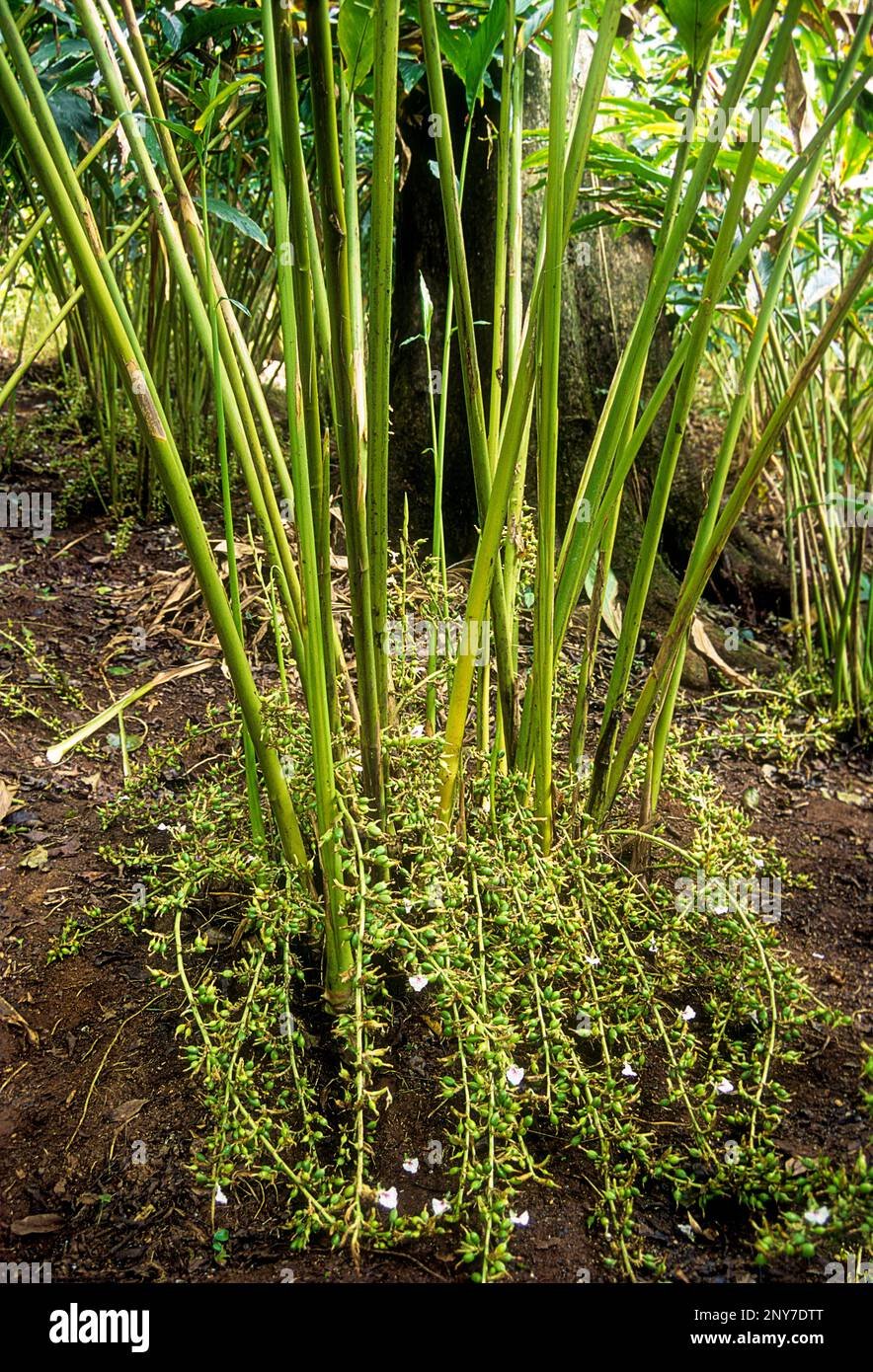
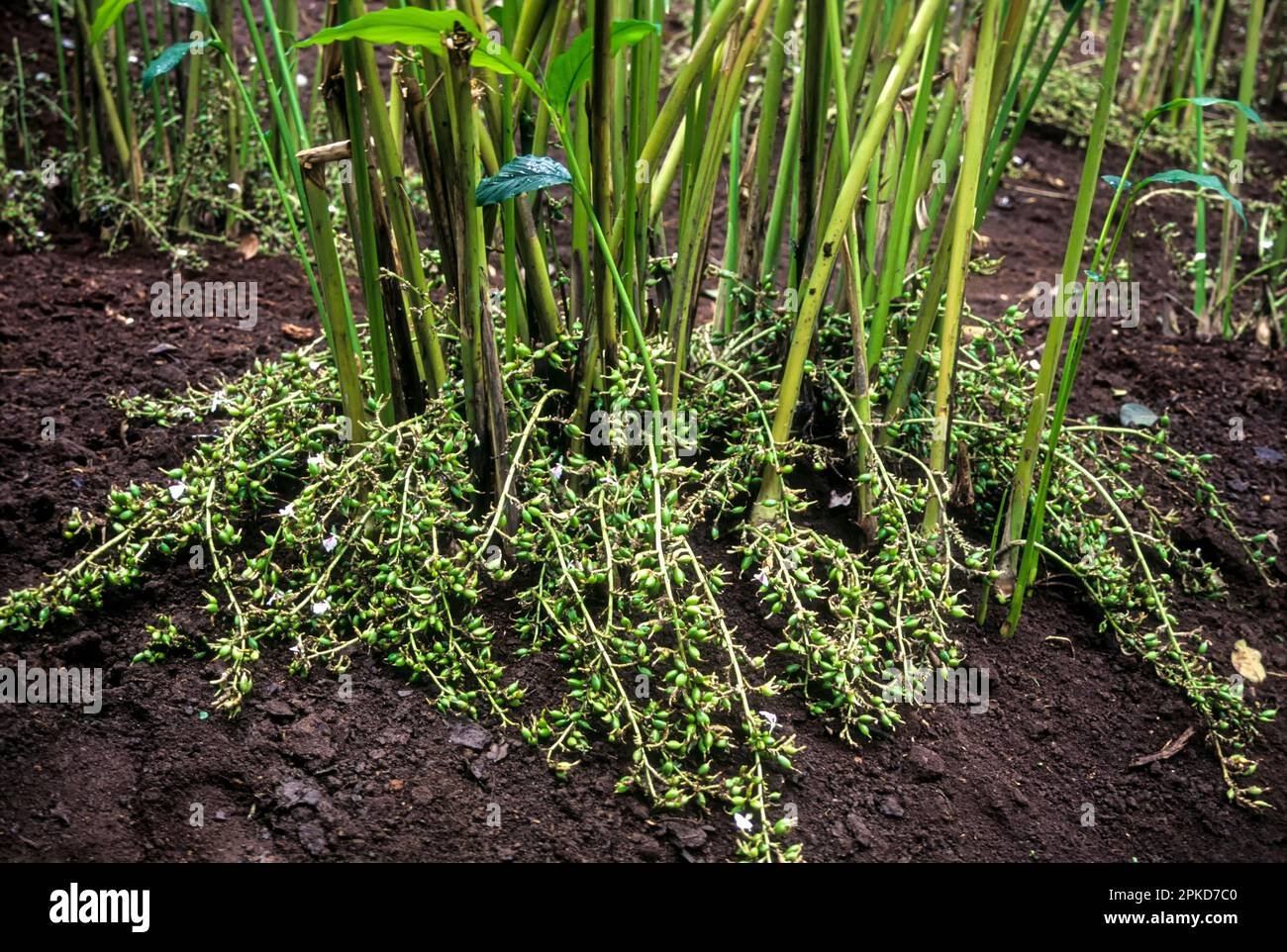
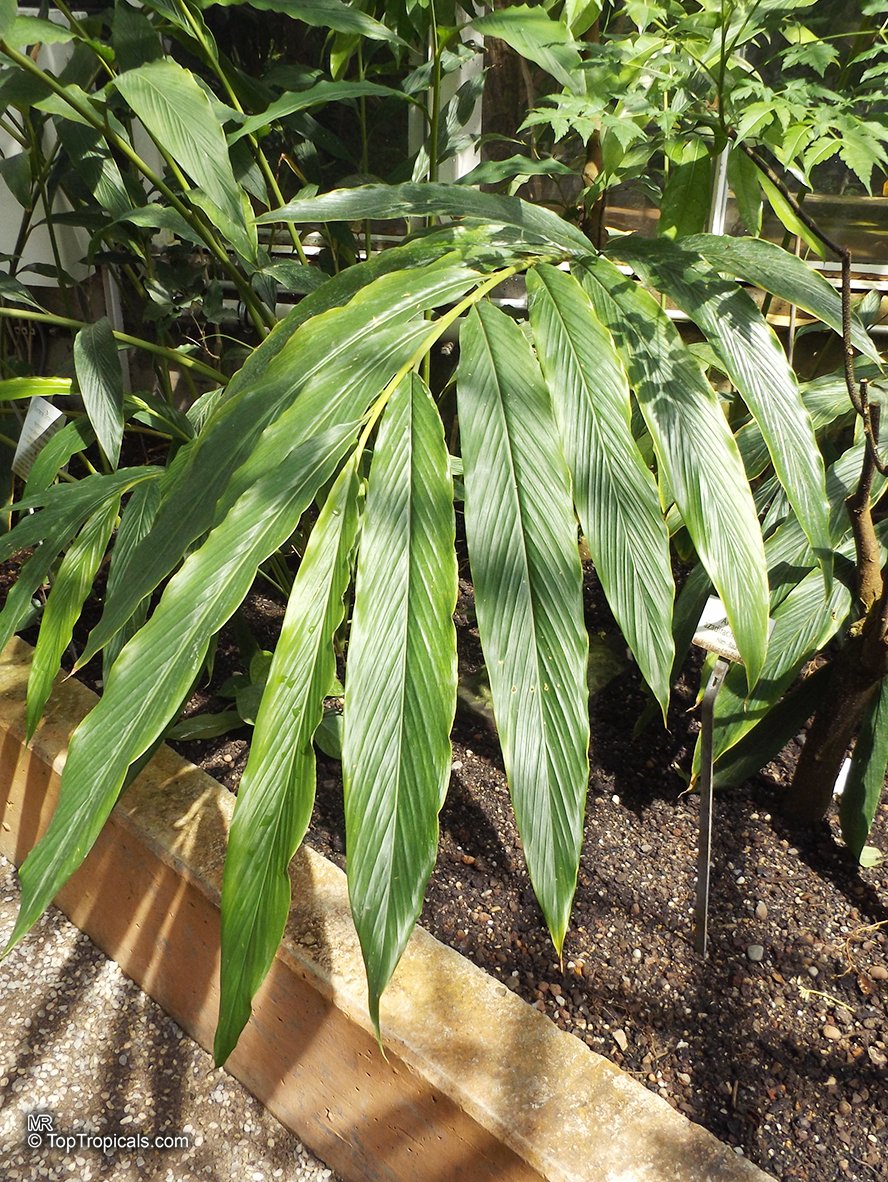
Field images (picha shambani)
| Name | Country | Maturity | Traits |
|---|---|---|---|
| Malabar-type selection | KE | 730 | Good aroma; suited to shade gardens. |
| Njallani/Green Gold type | TZ | 730 | High tillering, bold capsules where adapted. |
| Local small cardamom selection | UG | 730 | Locally adapted under agroforestry shade. |
| Stage | Product | Rate (kg/ha) | Notes |
|---|---|---|---|
| Basal | NPK 15-15-15 + compost | 150 | With heavy organic mulch. |
| Topdress | CAN 26% N | 120 | At 2 months after planting/flush. |
| Flowering/fill | SOP (K₂SO₄) | 120 | Supports capsule formation and quality. |
| Name | Type | Symptoms | Management |
|---|---|---|---|
| Shoot and capsule borer | pest | Bored shoots/capsules; webbing and frass; reduced set. | Remove infested shoots; maintain shade and sanitation; use recommended selective controls when needed. |
| Thrips | pest | Silvery/bronzed capsule surface; scarring and shrivelled pods. | Keep humidity with mulch/shade, encourage natural enemies; targeted sprays if heavy. |
| Aphids | pest | Sticky honeydew, sooty mould; virus risk. | Control ants, spot treat; remove highly infested shoots. |
| Rhizome/soft rot (Pythium complex) | disease | Yellowing, lodging; soft, foul-smelling rhizomes. | Well-drained beds, clean planting material, remove affected clumps quickly. |
| Leaf blotch/anthracnose | disease | Brown lesions on leaves; premature drying. | Improve airflow and shade balance; protectants during wet spells if required. |
| System | Typical | Min | Max | Notes |
|---|---|---|---|---|
| Low-input shade gardens | 0.35 | 0.2 | 0.5 | Basic mulching and weeding; minimal fertilizer. |
| Managed plantations (rainfed) | 0.7 | 0.4 | 1 | Shade regulation, manuring and pest control. |
| Intensive with irrigation | 1.2 | 0.8 | 1.5 | Good clonal material, steady moisture, careful harvest/drying. |
| Country | Region | Planting | Harvest |
|---|---|---|---|
| KE | Humid forest margins (high rainfall highlands) | Onset of long rains under shade trees. | Multiple pickings over 4–6 months once bearing. |
| TZ | Southern/Northern highlands with shade | Start of main rains; irrigated pockets can stagger. | Regular pickings during flush seasons. |
| UG | Moist highlands with agroforestry | At onset of reliable rains under filtered shade. | Green capsule harvests every 2–3 weeks in season. |
| Country | Region | Suitability |
|---|---|---|
| KE | Forest-edge highlands with reliable rainfall | High |
| TZ | Southern & Northern highlands (shaded valleys) | High |
| UG | Moist highland agroforestry belts | High |